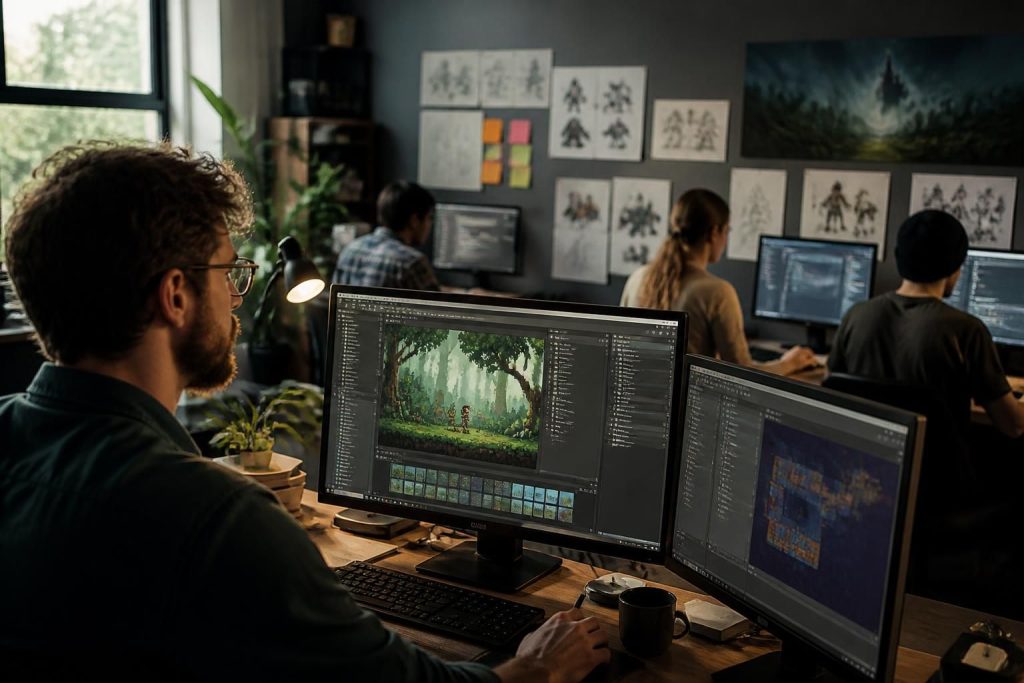
Indie game development is experiencing a remarkable surge, with a reported 50% increase in new studios emerging this year. This growth reflects not only the rising popularity of independent games but also highlights the evolving landscape of the gaming industry where small teams are making significant impacts. As technology advances and platforms become more accessible, creators are finding innovative ways to share their visions with the world, leading to a remarkable diversification of gaming experiences.
Emerging Trends in Indie Game Development
This year, several trends have emerged that are shaping indie game development. From the integration of advanced technology to the rise of diverse narratives, these trends are redefining what independent games can be.
One notable trend is the increased use of artificial intelligence in game design. Indie developers are leveraging AI to create more immersive experiences, allowing for dynamic narratives that adapt to player choices. This technology enables smaller teams to produce content that rivals larger studios, making the appeal of indie games even broader.
Additionally, there is a noticeable shift towards inclusivity and representation in storytelling. Developers are prioritizing diverse characters and narratives that were previously underrepresented in mainstream games. This commitment not only resonates with players but also enriches the gaming landscape, allowing for stories that reflect a wider array of human experiences.
The Role of Digital Distribution Platforms
Digital distribution platforms have played a pivotal role in the success of indie game development. Services like Steam, itch.io, and the Epic Games Store have democratized access to the market, enabling developers to reach a global audience without the need for traditional retail channels.
These platforms also facilitate community engagement, allowing developers to connect with fans directly. Players can provide feedback during the development process, which can significantly influence the final product. This two-way communication not only enhances the gaming experience but also fosters a community around indie games, creating a loyal base of supporters.
Furthermore, the success of indie games on these platforms has opened the door for emerging developers. Titles like “Hades,” “Celeste,” and “Hollow Knight” have demonstrated that indie games can achieve commercial success and critical acclaim, inspiring new developers to take the plunge into game creation.
Funding Opportunities for Indie Developers
With the rise of indie game development, funding opportunities have expanded significantly. Traditionally, securing funds for game development was a daunting task for small studios. However, platforms such as Kickstarter and Indiegogo have made it easier for developers to present their projects directly to potential backers.
Crowdfunding not only provides financial support but also helps gauge public interest in a game before its completion. Successful campaigns can lead to financial backing and community involvement, which are invaluable for indie developers. As an example, the Kickstarter campaign for “Shovel Knight” raised over $300,000, demonstrating the potential of this funding route. For more on this topic, see เว็บสล็อต.
Moreover, various grants and incubator programs have emerged, aimed specifically at independent developers. These initiatives offer financial assistance and mentorship, further cultivating innovation in the indie game sector. Such resources can be crucial for developers who may lack the initial capital to get their projects off the ground.
Challenges in Indie Game Development
Despite the growth in indie game development, several challenges persist. One major hurdle is the saturation of the market. As more studios emerge, standing out in a crowded space becomes increasingly difficult. Developers must find unique concepts and marketing strategies to capture the attention of players.
Additionally, the financial risks involved in developing a game independently can be daunting. Unlike larger studios, which often have substantial budgets and established distribution channels, indie developers must navigate marketing, production, and distribution with limited resources. This landscape necessitates a strategic approach to budgeting and project management.
Time constraints also pose a significant challenge. Many indie developers operate as part-time creators or in small teams, leading to extended development cycles. Balancing other responsibilities while trying to deliver a polished game can lead to burnout and impact the overall quality of the final product.
The Future of Indie Game Development
The future of indie game development appears bright, with ongoing advancements in technology and a growing acceptance of diverse narratives. As tools for game creation continue to evolve, developers will have even more resources at their disposal to create groundbreaking experiences.
Moreover, the trend towards subscription-based gaming services offers new distribution avenues for indie titles. As platforms like Xbox Game Pass and PlayStation Now expand their libraries, indie games can gain greater visibility. This model allows players to explore a wider array of games that they might not have considered purchasing outright.
As the gaming community continues to embrace independent studios, there is a palpable excitement around the potential for fresh ideas and innovative gameplay. The increasing demand for unique experiences suggests that indie game development will remain a vital part of the industry’s landscape.
In conclusion, the impressive 50% rise in new studios reflects the dynamic nature of indie game development today. With emerging trends, supportive digital platforms, innovative funding opportunities, and a community eager for unique gaming experiences, the future holds great promise for indie developers. As they continue to navigate challenges and push the boundaries of creativity, independent games are poised to play a crucial role in shaping the evolution of the gaming industry. The path ahead is filled with potential, inviting more creators to share their stories with the world.